
Match Your Placard, Avoid Fitment Mistakes: EV Tyres in Australia
Most Australian EV owners don’t need an exotic tyre label. They need the right size, load rating and a tyre matched to how they actually drive. Before you shop, photograph your vehicle’s tyre placard and confirm the load index and speed rating against what you’re being sold. ADR rules govern what can legally go on your car, so fitment beats marketing every time.
TL;DR:
- Australian EV owners should prioritize matching their vehicle’s load index and size specifications over marketing labels when selecting tyres.
- Heat resistance and load capacity are crucial for long-distance or off-road driving, especially in hot inland routes or towing situations.
- Replacing tyres closer to 3 mm tread depth is recommended for wet grip safety, despite the legal minimum of 1.5 mm.
- Confirming fitment involves checking the vehicle placard, not just the tyre sidewall, and ensuring the correct load and speed ratings are met.
- Using tools like Treadivo simplifies the process by visualizing tyres on the vehicle, verifying specifications, and arranging local fitting with properly checked pressure and alignment.
Table of Contents
- What EV tyres are and why they matter for Australian drivers
- How to choose EV tyres in Australia: a practical checklist
- Australian legal and safety standards that affect tyre choice and fitment
- When to replace and how to maintain EV tyres in Australia
- How to find, verify and get EV tyres fitted in Australia
- A quick word on priorities, by the kind of driver you are
- Buy the right tyre once, not twice
- Sources
- FAQ
What EV tyres are and why they matter for Australian drivers
An EV tyre isn’t a magic category. It’s a passenger tyre engineered around a different set of trade-offs, because electric vehicles are heavier than their petrol equivalents and deliver full torque the instant you touch the accelerator.
That extra kerb weight and instant twist force chews through rubber faster than a comparable combustion car, which is why most EVs run XL or HL load-rated tyres as standard fitment. Manufacturers also chase lower rolling resistance to protect range, since a tyre that resists rolling less means less energy pulled from the battery per kilometre. But shave too much rolling resistance and you often lose wet grip or wear resistance somewhere else. Every tyre design is a compromise between four things:
- Rolling resistance (protects range)
- Grip, especially in the wet
- Wear life under heavier load and torque
- Cabin noise, which matters more without engine sound to mask it
That last point catches a lot of new EV owners off guard. With no engine noise to cover it, tyre roar becomes far more noticeable, and manufacturers have responded with acoustic foam linings and quieter tread patterns in some models.
Australian conditions push these trade-offs further. Long, hot highway stretches through inland New South Wales or the Nullarbor build heat in the tyre carcass, which is exactly the scenario Michelin Australia flags as needing genuine heat resistance and correct load capacity. Coastal cities such as Perth and Melbourne bring wet, greasy roads in winter, where a tyre optimised purely for efficiency can leave you short on grip when it counts.
How to choose EV tyres in Australia: a practical checklist
Start at the vehicle placard, not the tyre shop shelf. It’s usually on the driver’s door jamb or in the glovebox, and it lists the exact size, load index, speed symbol, and any special markings your car needs, including XL, HL, run flat, or an OE (original equipment) code specific to the manufacturer. Copying that string precisely is the single most important step in the entire buying process. Choosing by an “EV” label alone, without checking it against the placard, is where most fitment mistakes happen.
Once you have the correct specification, work through your priorities in order:
- Confirm compatibility first. Size, load index and speed rating must meet or exceed what the placard states. Nothing else matters until this box is ticked.
- Weigh range against grip. If you do a lot of highway driving and range anxiety is real, lean toward a lower rolling resistance tyre. If you’re in Melbourne’s wet winters or Perth’s occasional downpours, put wet grip ahead of a small range gain.
- Factor in heat and load. Anyone towing, carrying heavy loads, or doing long outback runs should prioritise heat resistant compounds and a higher load index over marginal efficiency claims.
- Check the noise rating. EV cabins expose tyre roar, so if refinement matters to you, ask about noise performance specifically, not just tread pattern.
- Ask your fitter the OE question. Original equipment tyres are often tuned differently to after market replacement-spec versions of the same model, and independent testing shows this can change braking distance, noise and rolling resistance in the real world. Ask whether you’re getting OE-spec or standard replacement-spec, and pick based on what you actually value.
Before booking a fitting, confirm balancing and a post-fit alignment check are included, since EV torque exposes small alignment errors as rapid, uneven wear far quicker than a petrol car does.
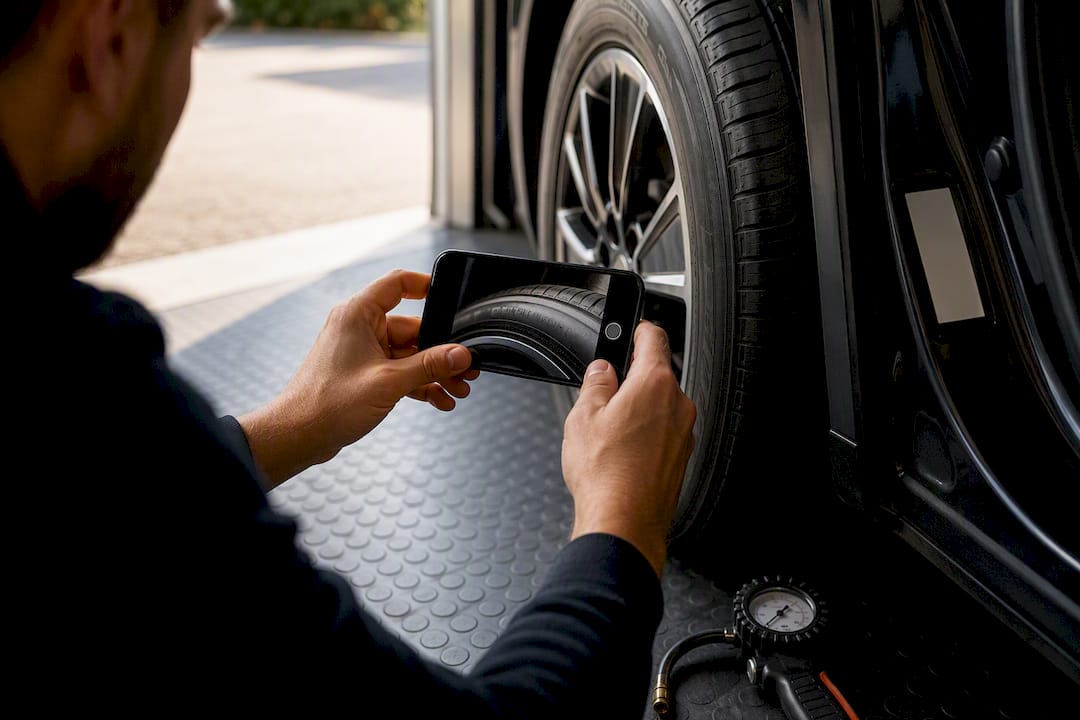
Pro Tip: Photograph the sidewall of your current tyre and the vehicle placard on your phone before you go shopping or order online. It takes thirty seconds and removes almost all guesswork about size, load index and speed rating.
Australian legal and safety standards that affect tyre choice and fitment
Tyre fitment in Australia isn’t a free-for-all. Vehicle Standard ADR 23/01 and its related compilations set out labelling, load and speed requirements for passenger car tyres, and the tyre fitted must be compatible with what your specific vehicle was approved to carry. This isn’t just red tape. A tyre with an insufficient load index can fail under sustained EV weight and torque, and a mismatched speed rating creates a genuine safety risk at highway speeds.
A few practical points follow from this:
- Legal tread depth in Australia is 1.5 mm, but that’s a bare minimum, not a target.
- RACV recommends replacing EV tyres closer to 3 mm remaining tread, because wet-weather grip drops off well before the legal limit.
- Installation matters too. A tyre fitted outside its approved speed or load specification can void warranty cover and create a defect under vehicle safety rules, regardless of how good the tyre itself is.
Matching the placard specification protects you legally and mechanically. It’s also the cheapest insurance you’ll ever buy, since a $30 fitting error can cost you a tyre, an alignment, or worse.
When to replace and how to maintain EV tyres in Australia
EV torque and weight turn small maintenance lapses into expensive problems fast. A regular routine catches most issues before they become a tyre replacement.
- Check cold tyre pressure monthly against the figure on your placard, not the number printed on the tyre sidewall.
- Inspect visually for cuts, bulges, or uneven wear across the tread face every time you check pressure.
- Measure tread depth with a gauge or the coin test, watching for the 3 mm point rather than waiting for the legal 1.5 mm minimum.
- Book an alignment and balance check immediately after fitting, after any kerb strike, or as soon as you notice wear appearing unevenly across the tyre.
- Replace more conservatively if your car sees a lot of high-heat highway running or regular towing, since both conditions accelerate wear beyond typical city driving.
How to find, verify and get EV tyres fitted in Australia
The safest path is to work from your placard outward, not from a tyre photo inward. Photograph the placard, then search Treadivo by your vehicle model or exact tyre size rather than guessing off a size string. Filter results for the load index, speed rating, and HL or XL marking your car actually requires, then check which local fitters have availability near you.
Treadivo’s own workflow is built around cutting the guesswork out of this process:
- Augmented reality visualisation shows how a tyre will look on your car before you commit
- Transparent pricing at checkout
- A quick checkout process once you’ve picked your tyre
- Fast fitting confirmation from a local fitter
Once the job’s done, ask the fitter to confirm pressure was set to placard spec, balancing was completed, and alignment was checked if any uneven wear was present beforehand. That handover conversation takes two minutes and catches most post-fitting issues before you drive off.
A quick word on priorities, by the kind of driver you are
If you’re commuting around Melbourne or Perth, wet grip and noise matter more than shaving a marginal percentage off rolling resistance. If you’re touring regional Western Australia or driving long New South Wales highways, load rating and heat resistance deserve top priority over everything else. If you’ve got a performance EV, braking and steering response under load will matter more to you than a quiet cabin. Across all three, don’t trade real world safety margin for a theoretical range gain. The industry sells range hard because it’s an easy number to advertise, but grip is what actually keeps you on the road in the wet.
— Areesh
Buy the right tyre once, not twice
There are smarter ways to buy EV tyres than ringing around fitters and hoping the quote matches what you’re shown in the shop. Treadivo lets you search by your exact vehicle model or tyre size, see the tyre visualised on your own car through augmented reality, and check pricing with no hidden extras before you commit to anything.
The process runs in a few minutes flat. Confirm your placard specification, search Treadivo’s tyres range by model or size, filter for the load and speed rating your car needs, and pick a verified local fitter with same-day fitting confirmation. If you’re in Perth, you can book directly through Treadivo’s Perth fitting page; Melbourne drivers can do the same through the Melbourne fitting page. Not sure your current size is right? Run it through the tyre size calculator first, then book your fitting once you’re confident.
Sources
- RACV — Best tyres for EVs
- Drive — EV tyre comparison: which tyre performs best on an electric car?
- Vehicle Standard (ADR 23/01) compilation
- Michelin AU — EV tyre buying guide
FAQ
Do EVs need special tyres in Australia?
Not a special category exactly, but most EVs need tyres with a higher load index (often XL or HL rated) to handle the extra weight and torque. The safest approach is matching your vehicle placard specification rather than shopping by an “EV” label alone.
What’s the difference between a normal tyre and an EV tyre?
EV-optimised tyres typically prioritise lower rolling resistance to protect driving range, along with a higher load rating for extra vehicle weight and quieter tread designs to offset the lack of engine noise. The underlying construction is still a standard passenger tyre built to ADR requirements.
What are the best tyres for an EV in Australia?
There’s no single best tyre for every EV owner, because the right choice depends on whether you prioritise range, wet grip, heat resistance or noise. Michelin Australia’s guidance points to low rolling resistance and load capacity as top considerations for long-distance Australian driving, while Drive’s testing shows braking and noise performance varies meaningfully between models.
When should I replace my EV tyres?
The legal minimum tread depth is 1.5 mm, but RACV recommends replacing closer to 3 mm to preserve wet-weather grip. Replace sooner if you drive in high heat regularly or tow heavy loads.
How do I find the right tyre size for my EV?
Check the placard on your driver’s door jamb or in your glovebox for the exact size, load index and speed rating. You can search that specification directly through Treadivo’s tyres range or verify it first with the tyre size calculator.