
How to check tyre tread depth in Australia
Tread is what clears water out from under your tyres. As it wears away, wet grip and braking distances get worse long before the tyre becomes illegal. Here is how to check yours properly, what the law requires, and when safety bodies suggest replacing.
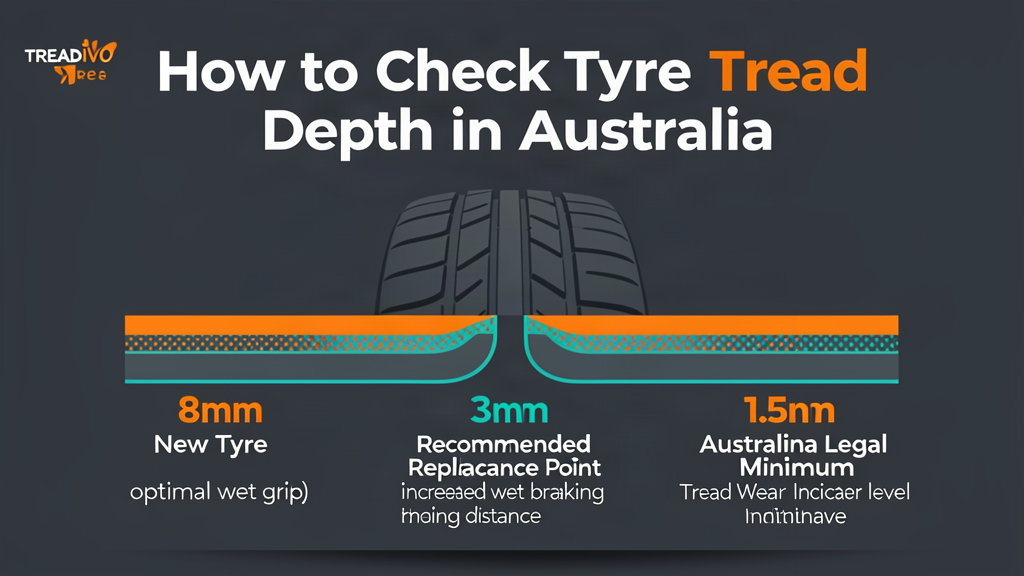
The Australian legal minimum is 1.5 mm
Under Australian state vehicle safety standards (including VicRoads, Transport for NSW, and WA Department of Transport rules), tyres must maintain at least 1.5 mm of tread depth in the principal tread grooves. Manufacturers make this easy to spot: every road tyre has moulded tread wear indicators (TWI) — small raised bars in the bottom of the main grooves, flagged on the sidewall by a triangle, the letters "TWI" or a brand marker.
When the tread wears down until those bars are flush with the surrounding tread, you are at 1.5mm — the tyre is worn out and no longer roadworthy. A tyre below the limit can fail a roadworthy inspection and may attract a fine or defect notice.
Why safety authorities and manufacturers recommend early monitoring
As tread wears, a tyre has less capacity to disperse standing water, which can reduce wet-weather traction and increase stopping distances. Road safety organisations and tyre manufacturers often recommend monitoring tyres closely from around 3.0 mm and planning replacement before reaching the statutory limit.
- Wet braking: shallow grooves hold less water, so it takes noticeably longer to stop on a wet road than on the same tyre when new.
- Aquaplaning: worn tread starts to float on standing water at lower speeds, which means less steering and braking control in heavy rain.
- Buffer for wear: replacing at 3mm leaves margin before the legal limit, so an unexpected wet spell or long trip doesn't catch you out.
How to check your tread in five minutes
- 1. Park safely and cool the tyres. Flat ground, handbrake on, engine off.
- 2. Find the tread wear indicators. Look for the triangle or "TWI" mark on the sidewall, then follow it into the nearest main groove.
- 3. Measure the main grooves. Push a tread depth gauge into the groove until it sits flat on the tread blocks and read the depth.
- 4. Measure three points per tyre. Inner, centre and outer — then use the lowest reading for that tyre.
- 5. Repeat on all four tyres (and the spare). Fronts and rears wear at different rates.
- 6. Look for uneven wear. Worn shoulders, worn centre or one worn edge point to pressures or wheel alignment, not just mileage.
Frequently asked questions
What is the legal minimum tyre tread depth in Australia?
1.5 mm in the principal tread grooves. Under Australian state vehicle safety standards (VicRoads, Transport for NSW, WA Department of Transport, and equivalent rules in other states and territories), tyres must maintain at least 1.5 mm tread depth in the principal tread grooves. A tyre is illegal once any tread wear indicator is flush with the surrounding tread.
Where are the tread wear indicators on a tyre?
They are small raised bars moulded into the bottom of the main tread grooves, usually marked on the sidewall by a small triangle, the letters TWI or the brand logo. When the tread wears down level with those bars, only 1.5mm of tread is left.
Should I replace tyres before they reach 1.5mm?
Yes. Road safety organisations and tyre manufacturers often recommend monitoring tyres closely from around 3.0 mm and planning replacement before they reach the statutory 1.5 mm limit, because wet braking distances and resistance to aquaplaning decline as tread depth decreases.
How do I measure tread depth at home?
Use a tread depth gauge in the main grooves at the inner, centre and outer sections of each tyre, then take the lowest reading. If you don't have a gauge, compare the tread against the tread wear indicator bars, or ask a tyre professional to measure it for you.
Do tyres wear evenly across the tread?
Often not. Under-inflation wears the shoulders, over-inflation wears the centre, and wheel alignment problems wear one edge. Always measure several points on every tyre and have alignment checked if wear is uneven.
How old is too old for a tyre?
Tread depth is not the only factor. Rubber hardens and cracks with age, so have tyres inspected by a professional as they get older regardless of remaining tread, and check the four-digit DOT week/year code on the sidewall.
No gauge handy? Try AI Tread Check
Upload a photo of your tread and we'll estimate the remaining depth and how much life is left. It is an informational estimate only — always confirm with a gauge or a qualified tyre professional before deciding a tyre is legal.
This guide is general information, not a roadworthy assessment. The Australian statutory minimum tread depth is 1.5mm; state road authorities and a qualified tyre professional are the final word on whether a specific tyre is legal and safe to use.